04 February 2026


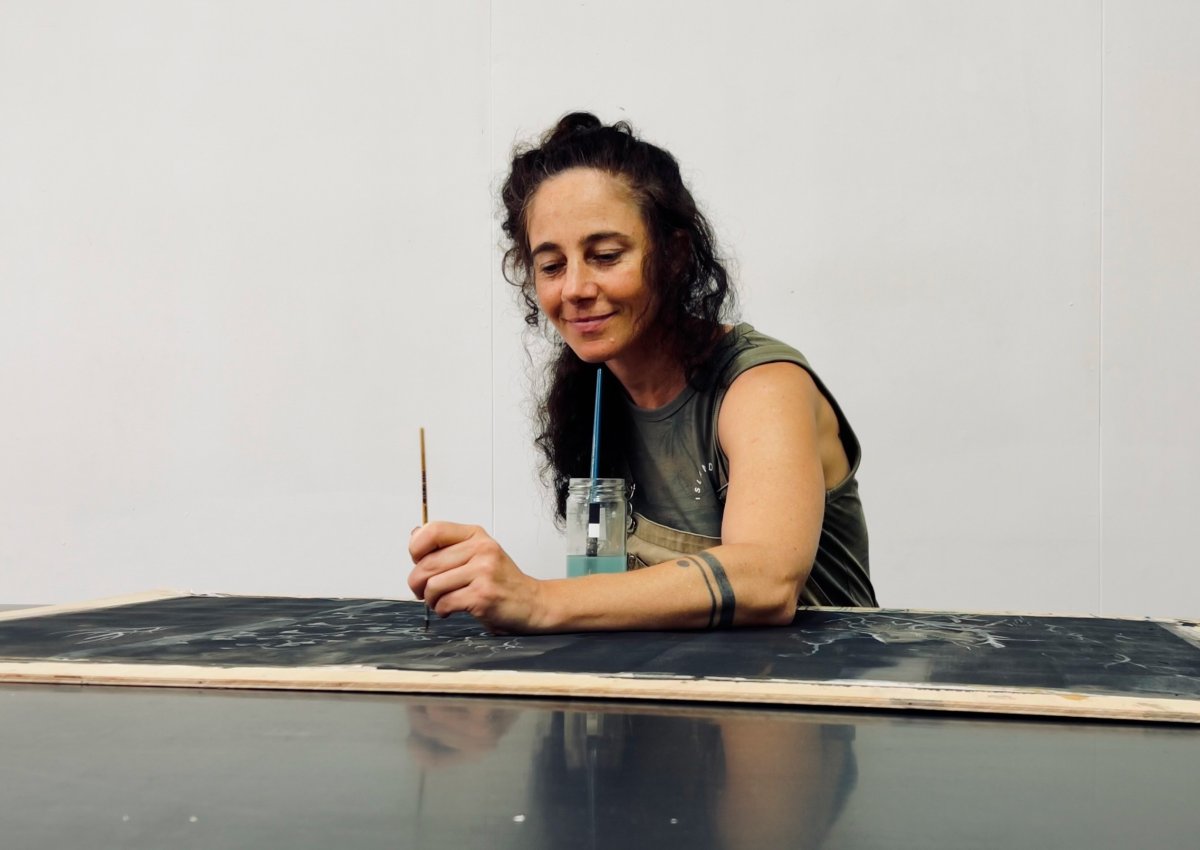
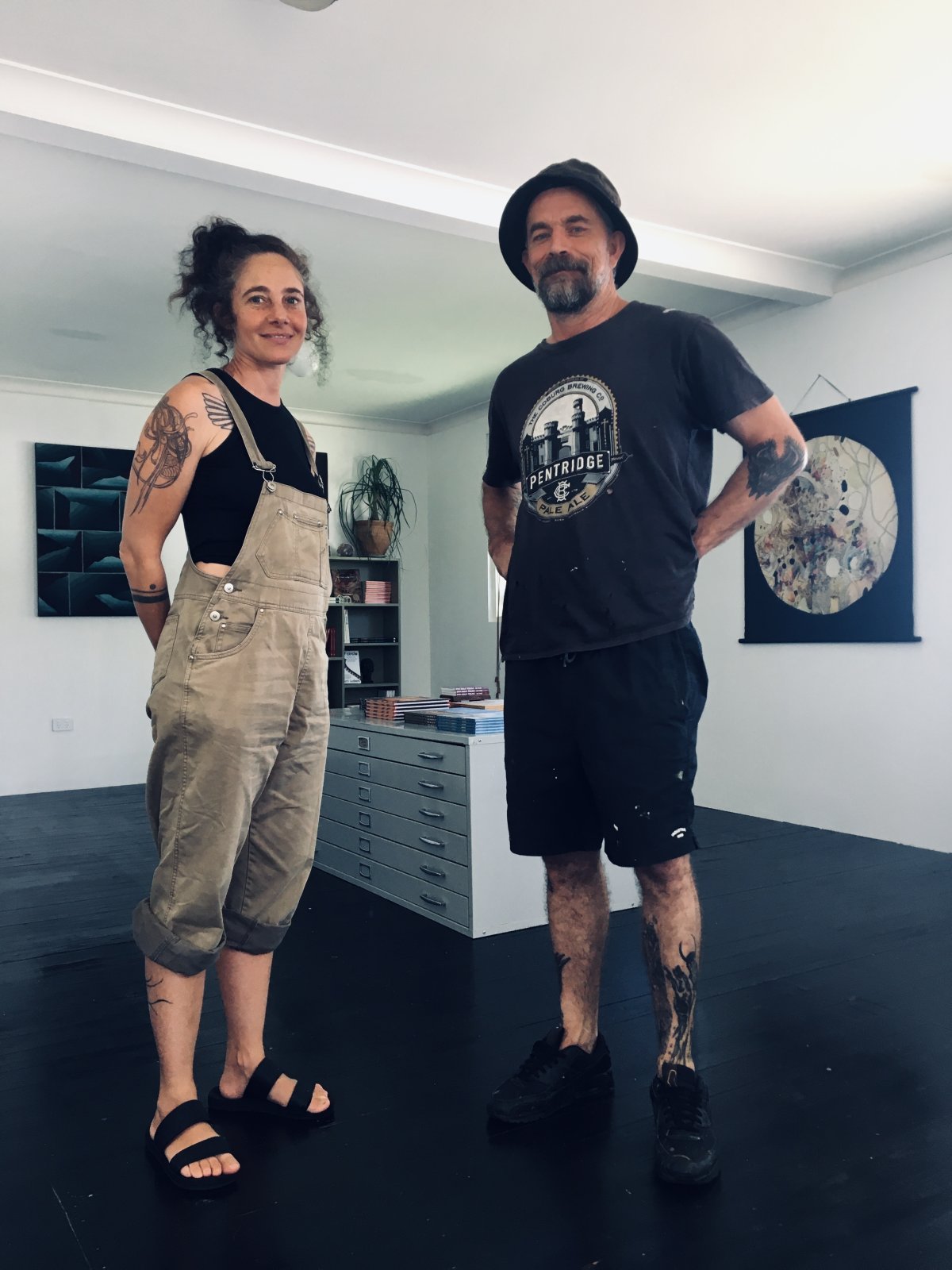
Hello Aviva, and congratulations on the upcoming Esk Studio exhibition. To begin, could you share a little about yourself and your journey into the arts; your studies, early projects or passions, and how these experiences have shaped where you are today?
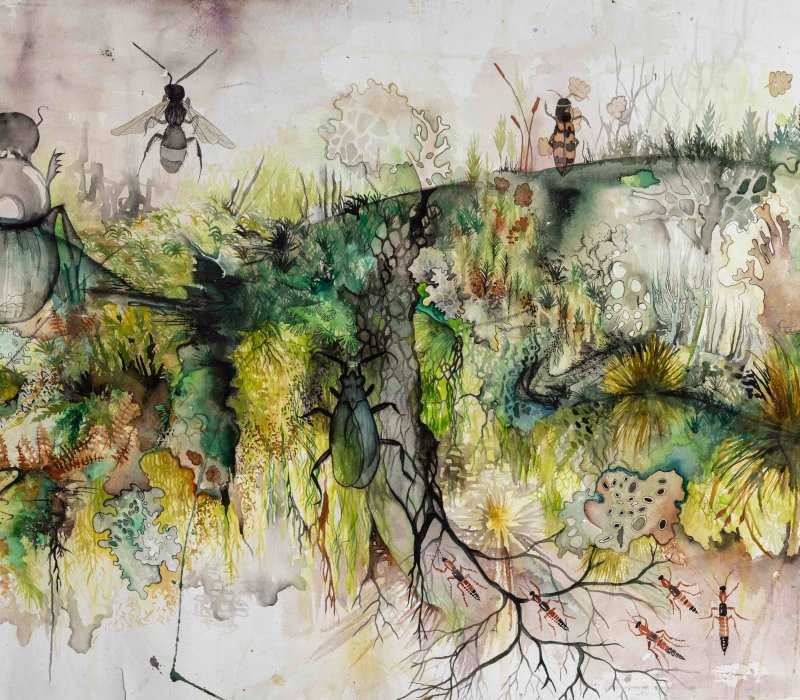
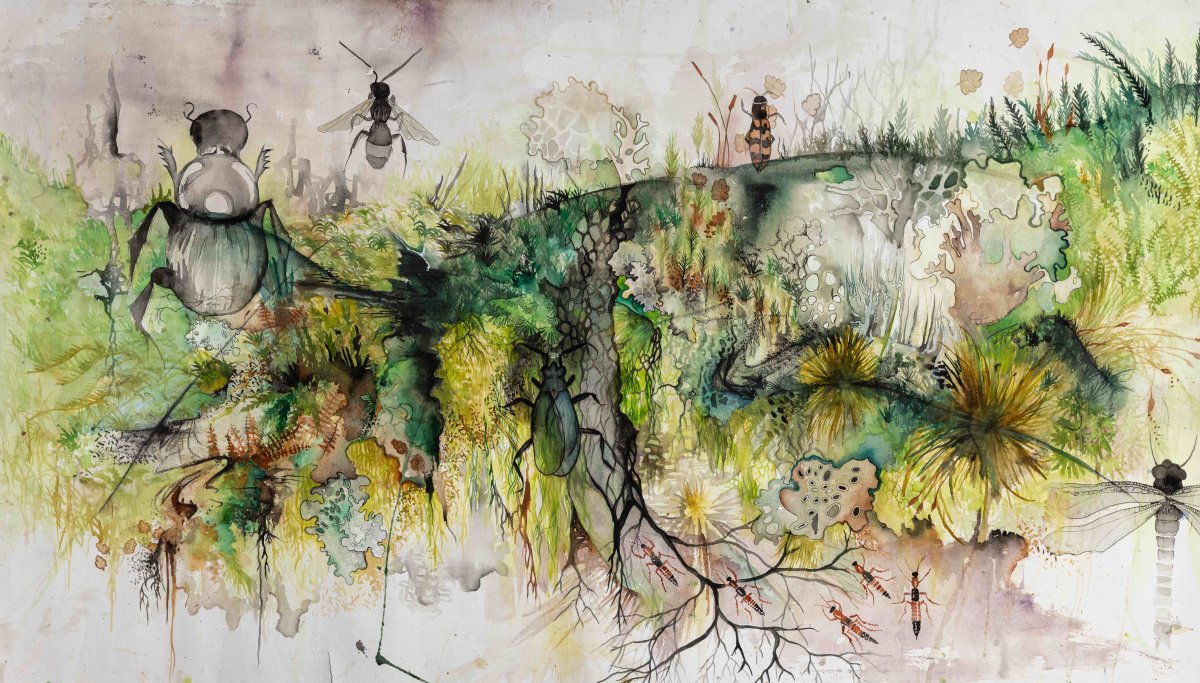
Art for me is a tool for knowledge making, it helps me to sense make this world. I work with systems thinking, driven from an ecological perspective and use art as a way to sense make ecological systems. By this, I mean the complex relationships, between humans, creatures, matter and time. I have training in ecological science, environmental systems and recently completed a PHD in Creative Arts and Literature, using a transdisciplinary lens to contest categorisation in ecological science. For this, I worked with carbon as a muse.
My journey to this art- science field began when, as a young environmental old growth forest activist, I realised the power of art to inspire, bring people together and educate on complex ecological science. Through this, I began to embody a visual ecologist. This led to the co- development of books on microbes and mutualism, with the Small Friends Books team. Small Friends Books informed my practice of collaboration. These four books, developed over a decade, bring together an interdisciplinary team of artists, writers and scientists to produce books on mutualism and microbes. The iterative process and trust in other people’s visions and skills has taught me a lot about collaboration and has been infused in my practice going forward.
You are the codirector of Esk Studio. For readers who may not be familiar, what is Esk Studio? How did it come together, who is involved, and what is the purpose or vision that drives the collective?
Esk studio is a multi-disciplined artist run initiative with a focus on environmental conservation, education and community through an arts lens.
We create projects, gathering spaces, and performances that revolve around beauty, poetry, inquiry, play and awareness, in service to the earth and each other. Al Stark and I’s practises found each other and we began to riff on thinking through the nexus of eco philosophy, education and arts practice. The language of art has much to offer in collective resistance.
My journey to this art-science field began when I realised the power of art to inspire, bring people together and educate on complex ecological science.
How did you and Al Stark first connect, and what led the two of you to make the decision to form a collaborative studio rather than continue working as independent artists?
Al and I gravitated towards each other through our Melbourne creatives community, finding we had both include art and a care for eco justice as part of our practice. We became lovers, and I moved up towards his family home in Woombah. We realised, as artists, while collaborative in many ways, we needed independent spaces to make and create work, so I rented a house on the main street of Iluka, thinking I may have occasional open studios. Kind of accidently, Esk Studio emerged, as Al and I began initiating creative and educational encounters- Esk Studio got a life of its own. Through developing programs and events we were able to envisage how new models of art, environment and community resilience could emerge. We both still have our independent practices, but found, coming together allowed us to breathe deeper into community offerings, aesthetic immersions and ecological education.
Esk Studio is based on Yaegl Country in the Northern Rivers. To what extent does the location influence the collective’s work? Does the environment shape the ecological or relational themes you explore, or does place inform the practice in a different way?
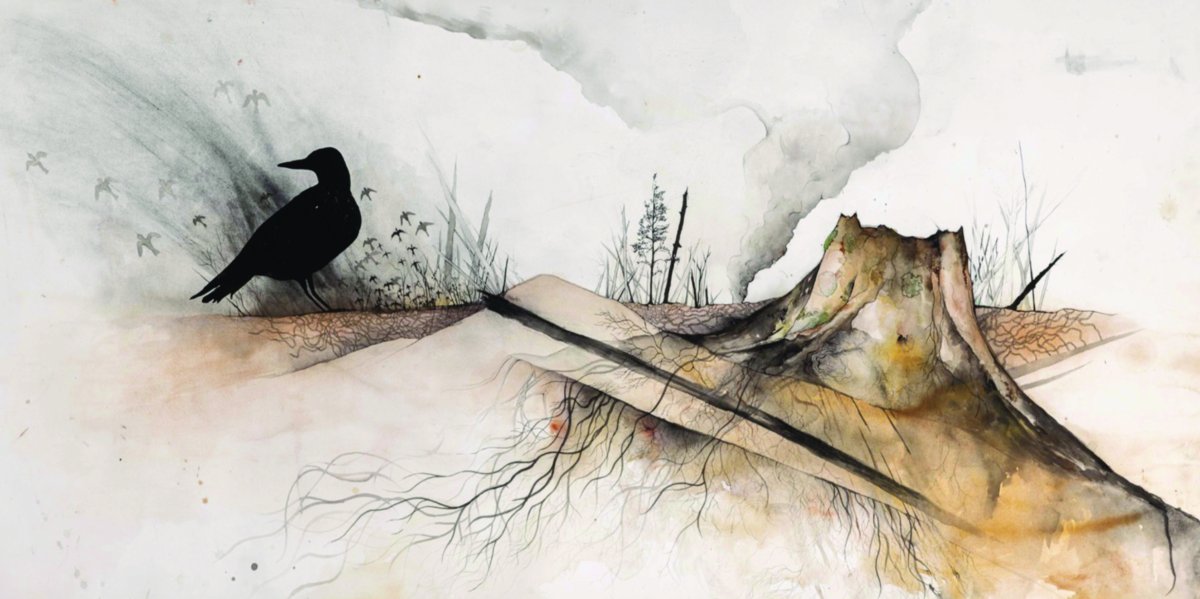
Place will always inform my practice, as a visual ecologist. I often seek ecology systems facing challenges and these become the integral theme of my work, partly as a way to bring attention to the harm and violence happening to the landscapes.
Yeagl Country has been a powerful influence in the studio’s work, through Country and the community connected to it. The studio is named after the Esk River, which flows through Bundjalung National Park. This river is a slow, dark water estuary within the national park is very special. Al’s father, Barry Stark, an ecologist and fishman, knew this river world, so it holds a special place for Al.
Our in house studio in Iluka was sold and thus Esk Studio is no longer a venue/ gallery space but rather project based. A slow moving process, much like the Esk River, does inform the studio’s work. We do not participate in a capitalist economy, and rather focus on slow, emergent projects, always earth and community focused.
We do not participate in a capitalist economy, and rather focus on slow, emergent projects, always earth and community focused.
Esk Studio is part of the exhibition L U N A R_B I O M E, opening at the Grafton Regional Gallery on 14 February. What sparked the development of this body of work, and what can visitors expect when they enter the exhibition?
L U N A R_B I O M E is Esk Studio’s first major project out the Iluka studio and brings together community, art and education surrounding themes of environmental collapse and recovery. We are working with a core collaborative team of artists including Antoinette O’Brien, Jade Dewi Tyas Tunggal and timecodespace, as well as a number of community members who will be speaking and presenting at events throughout the exhibition.
The exhibition operates as both ritual and classroom. Symbolic gestures, sensory atmospheres and communal actions offer an accessible form of eco philosophy. Visitors are encouraged to reflect on cycles of life, death and regeneration, and on how cultural narratives shape our relationship with the Earth.
Is there a particular piece within L U N A R_B I O M E that holds special significance for you or for the collective? What about it feels especially meaningful?
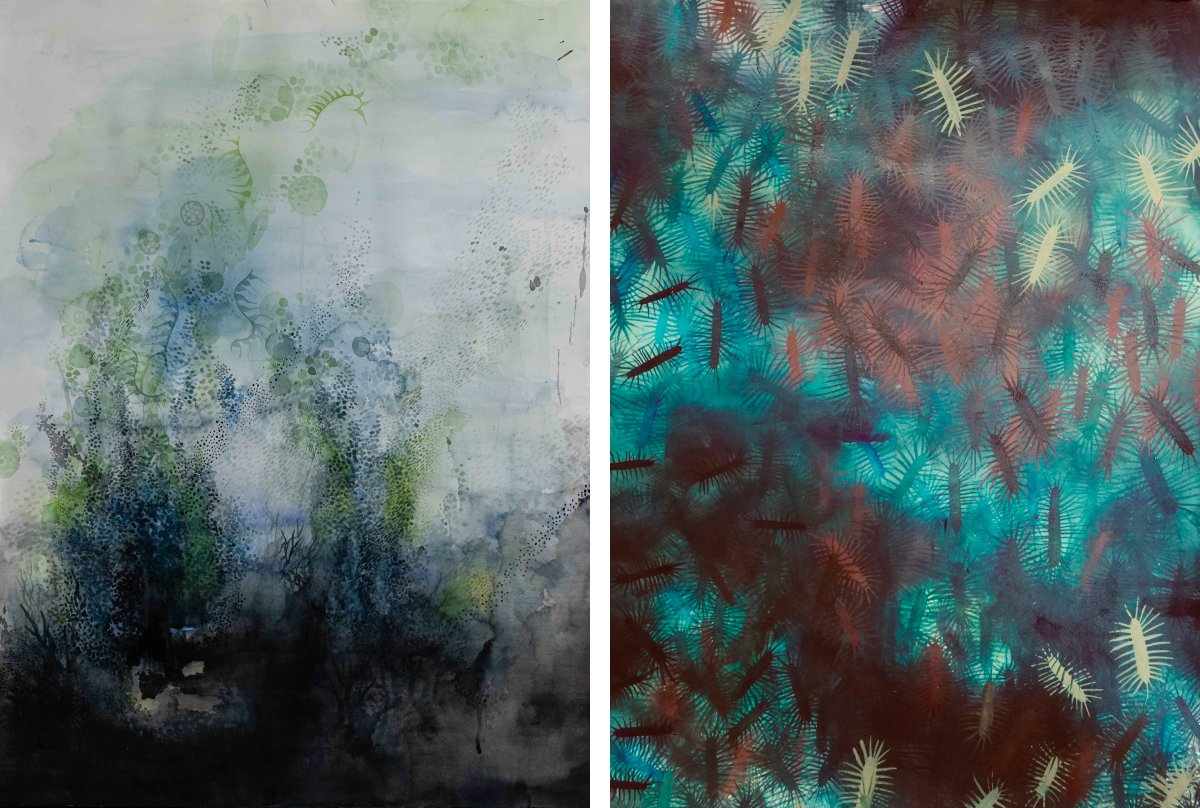
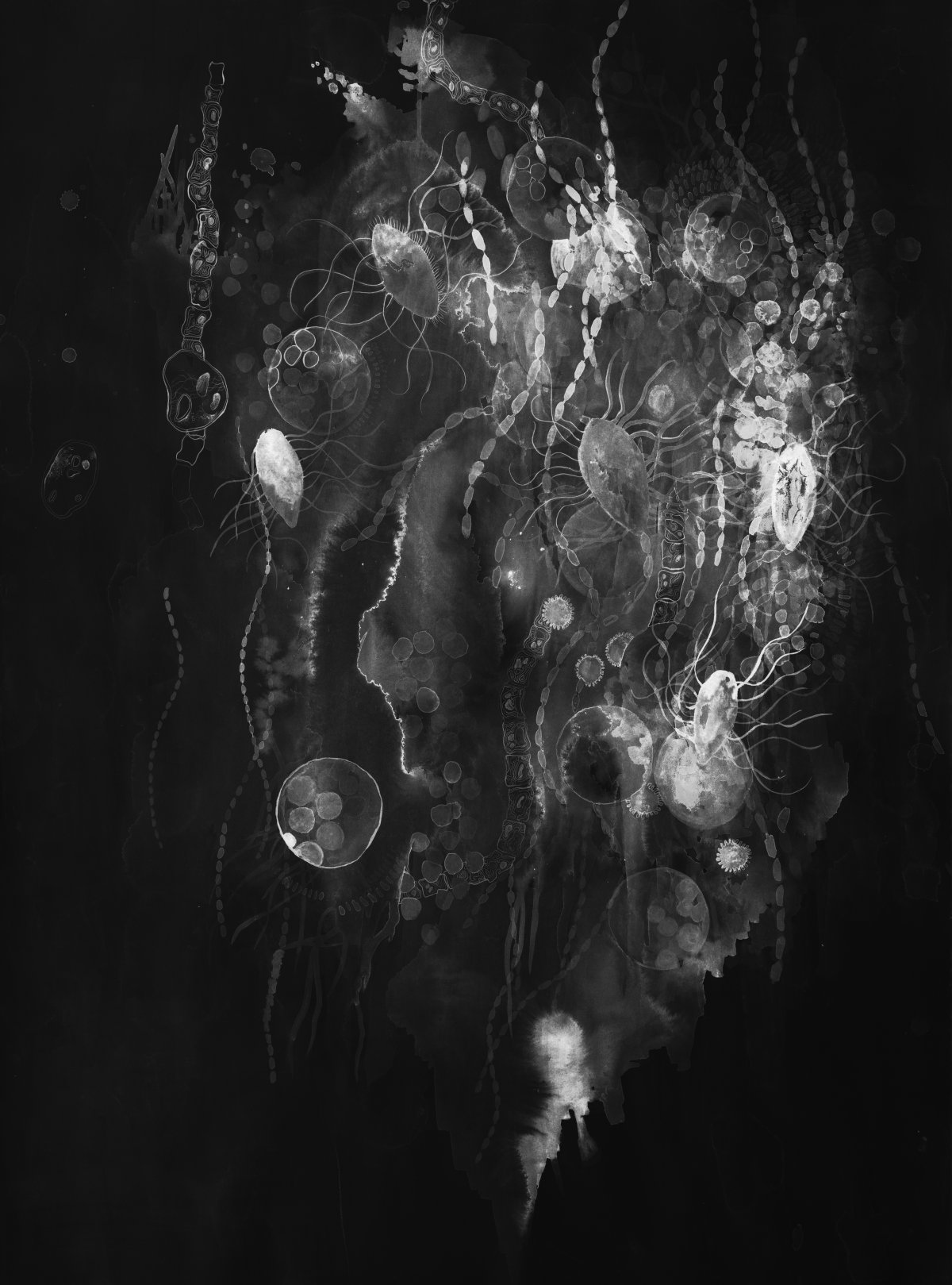
There are a number of potent works throughout the show I would love to share, though a personally significant one for me is called ‘Photic Memory’. It hangs from the high ceiling, over the gathering space of soft sculptural rocks. This work evokes huge drops of micro algae rich water, that photosynthesise this planet into being. Earth’s atmosphere became significantly oxygenated, starting with the Great Oxidation Event, around 2.4 billion years ago, but it took another billion years, with a second rise around 800-500 million years ago, for oxygen levels to reach the now, breathable levels. Photic Memory speaks to the world through centring these ancestral micro algae who have created, and still create each breath, every inhale and exhale, a memory of this ancient molecular reaction. These works also light up, speaking to notions of photosynthesis and its integral role in earth liveliness.
We are forever collaborating with the planet around us, and with the community around us.
Collaboration often brings unique challenges and unexpected creative outcomes. What have been some of the most rewarding aspects of working collectively at Esk Studio? Has the collaboration changed or expanded your own artistic practice?
Esk Studio, as a collaboration has been important to Al and I, who find the concept of individualism, which is so heavily embedded into the art world (and into modern culture as a whole) as problematic, in that nothing is ever not a collaboration. We are forever collaborating with the planet around us, and with the community around us. Relational processes, with humans and non- humans, shape ideas and concepts. Acknowledging these relational encounters widens the net of inclusion and subverts power dynamics. We are still experimenting with how these processes can be best acknowledged and included in process. Of course, collaboration is not always easy, certainly Al and myself, have moved through surrenders to move forward, but I truly believe, that by committing to the process, suspending ego and improving communication, each collaboration has the potential to improve. Learning how each other thinks, works and moves through ideas, means that with each iteration, we become more succinct and aware of each other’s perspectives, vulnerabilities and skill sets.
And lastly, for artists who are forging their own paths, what advice would you offer? How can emerging creatives find opportunities, and how should they think about whether – or when – to join or form a collective of their own?
Collectives allow many minds to come together and resist this cult of individualism so expected of artists in this world. Whilst it requires a release of ego and a process of vulnerability and trust in the process- by working together, with a common mission, in our case, a care for the earth and each other, means bigger and more complex works can be produced.
Collectives allow many minds to come together and resist this cult of individualism so expected of artists in this world.
This exhibition brings together notions of grief, imagination and play in response to the collective existential reckoning of the times.
Grafton Regional Gallery | 14 Feb – 12 Apr, 2026
This show brings with it an extensive public program: