10 March 2026


Can you walk us through your creative journey, from your studies and early projects to how you found your way into 3D prototyping and fabrication? Such a nice field!
Absolutely, it’s a long story so I’ll try my best to speed it up. I moved from the Central Coast to Sydney to study a Bachelor of Design in Photography and Situated Media at UTS. The course was very conceptual and didn’t instil many applicable practical skills regarding the workplace market. Very hard to make money from this BA.
I worked as a photo assistant in Sydney and also did my own shoots for Stab Magazine, NITV, VICE and Monster Children. I was a terrible photographer. As soon as I graduated, I got my J-1 visa and moved straight to NYC. I didn’t know anyone and had no connections. I learnt my first major life lesson and applied for 1000 jobs online and ended up working at the New York Yankees Stadium for the photography department. That was insane.
I eventually got another opportunity to work at a high-end photo studio in Queens and left the stadium. I didn’t like that either and left for a surf school in Rockaway, Brooklyn, whilst also assisting a high-end wedding photography studio in Manhattan and flying all over America shooting the 1 percent of America’s weddings. I witnessed some very strange things. I think I was 22 at the time and I had never been to a wedding.
This all led to me meeting someone at a bar who worked in a big workshop in Greenpoint, Brooklyn, designing and building sets for NYC’s photography industry. That was my starting point into what Trade Arts is.
I then came back to Australia and studied Honours in Fine Art at UNSW, which I dropped out of, and then enrolled in a Masters of Teaching. I dropped out of that too and decided to pursue the film industry after falling into a TV show. I climbed the ladder, taught myself Rhino 3D, a CAD software, and worked across multiple departments designing and fabricating sets and props.
This all led me to starting Trade Arts as a way to have creative autonomy and apply my skillset across multiple productions and industries whilst building a like-minded team and culture where going to work is a positive thing. I also moved the business from Melbourne to the Northern Rivers, which was a huge gamble, but it worked.
Is Trade Arts a solo practice, or do you collaborate with a wider team depending on the project?
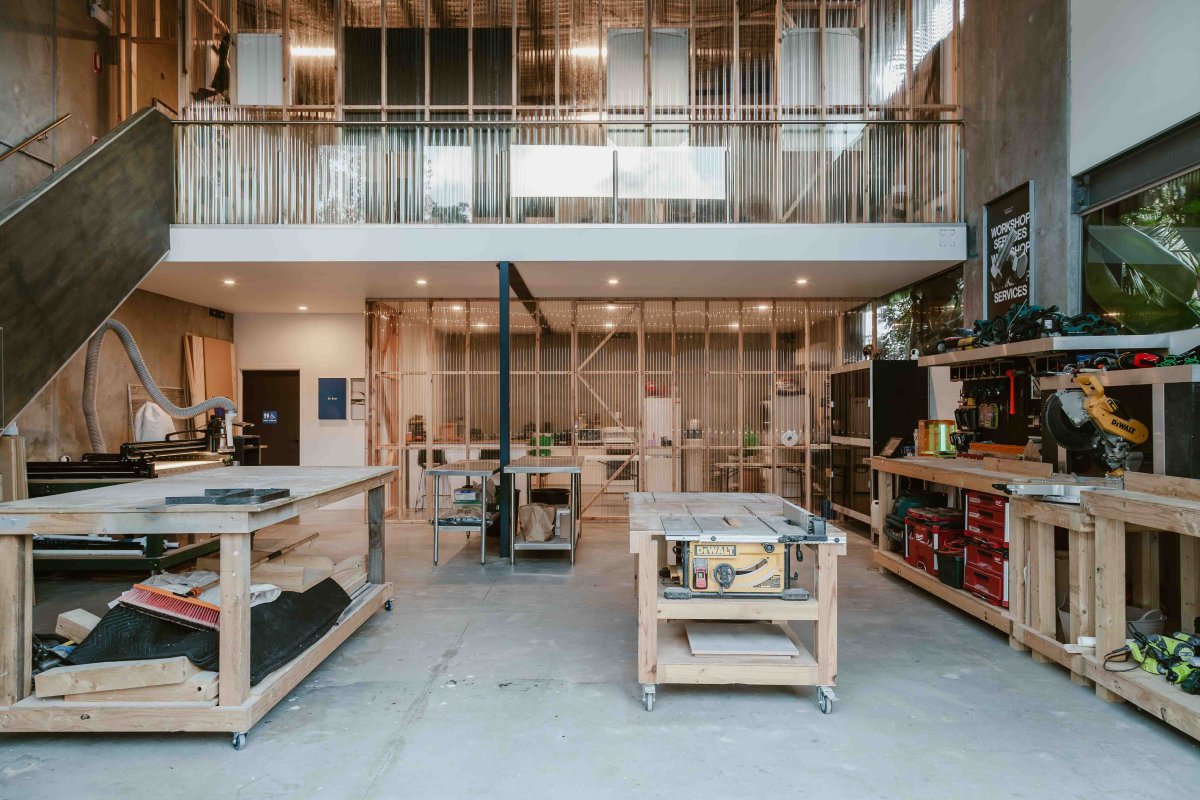
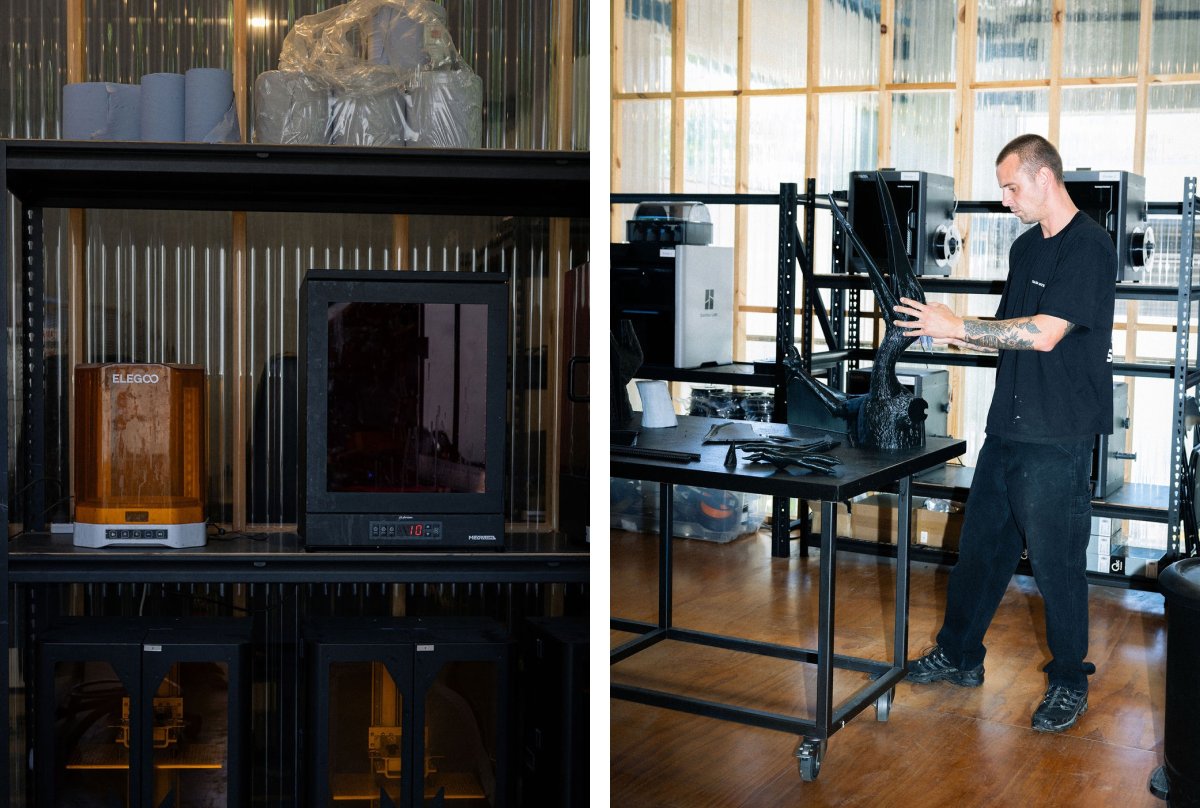
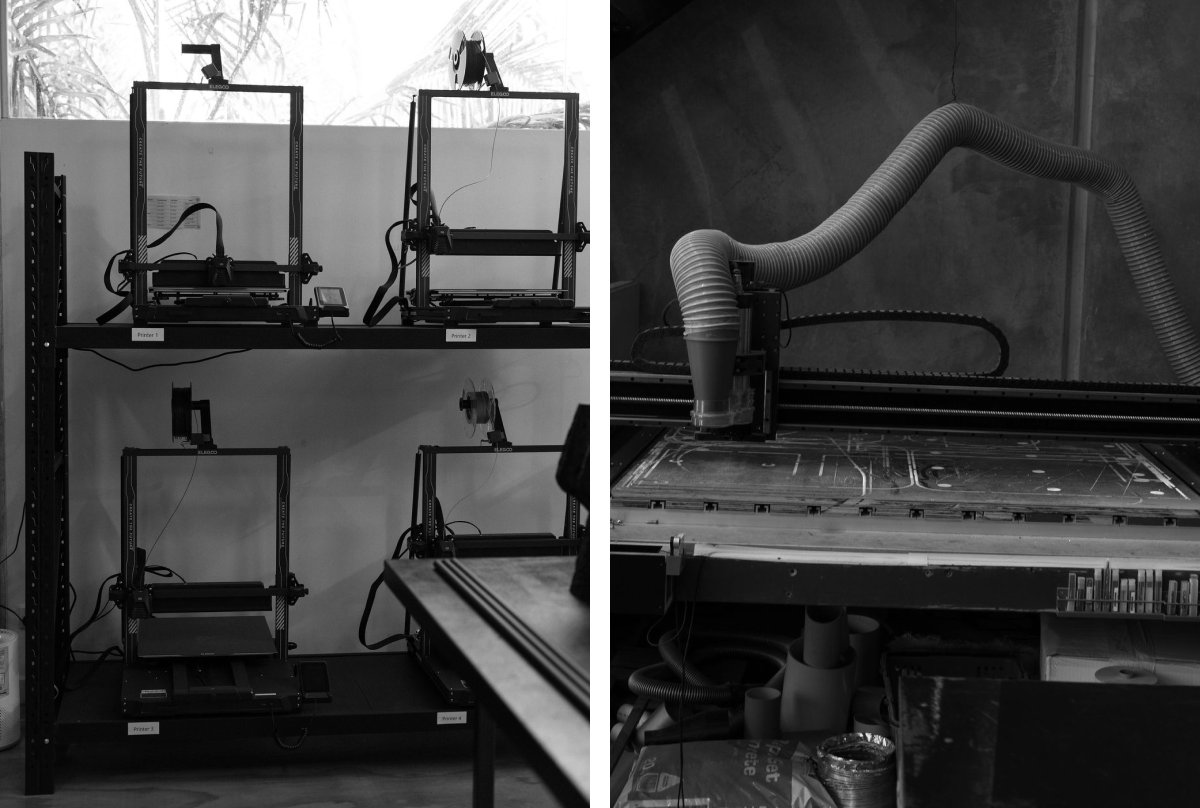
Trade Arts has never been a solo practice. The team grows and shrinks per project. I have a highly skilled team of subcontractors and a uniquely talented full-time employee who can literally make anything, from upholstery to metal work to advanced 3D printing. It’s quite incredible.
I think Trade Arts will end up being one of the only companies in Australia that can offer full-service design and fabrication under one roof in the future.
Starting Trade Arts was a way to have creative autonomy and apply my skillset across multiple industries whilst building a like-minded team.
What makes fabricating props and set pieces for film different from creating standard 3D objects or prototypes?
Fabricating props and set pieces for film is very different from creating standard 3D objects or prototypes because the final piece must not only function but also feel completely believable on camera. Every object must sit convincingly within the story’s world, whether it is something grounded and realistic or more stylised, futuristic or theatrical. Even if a prop only appears on screen for a few seconds, audiences will immediately notice if something feels fake, flimsy or unresolved.
That means the surface finish becomes incredibly important. Layer lines, visible seams, the wrong texture or even the wrong sheen level can all read clearly on camera. A huge part of the work is scenic finishing, filling, sanding, priming, painting and weathering materials so they convincingly resemble metal, timber, stone or aged industrial surfaces.
The timelines are also much more compressed than in traditional design and prototyping. Sometimes a concept has to become a finished hero prop in a matter of days. That requires quick problem-solving, hybrid workflows and builds designed not only to look good but also to survive handling, transport, multiple takes and fast repairs if needed. It is fun, highly creative and often extremely intense.
Beyond digital modelling and CAD work, what hands-on skills are essential in your day-to-day fabrication process?
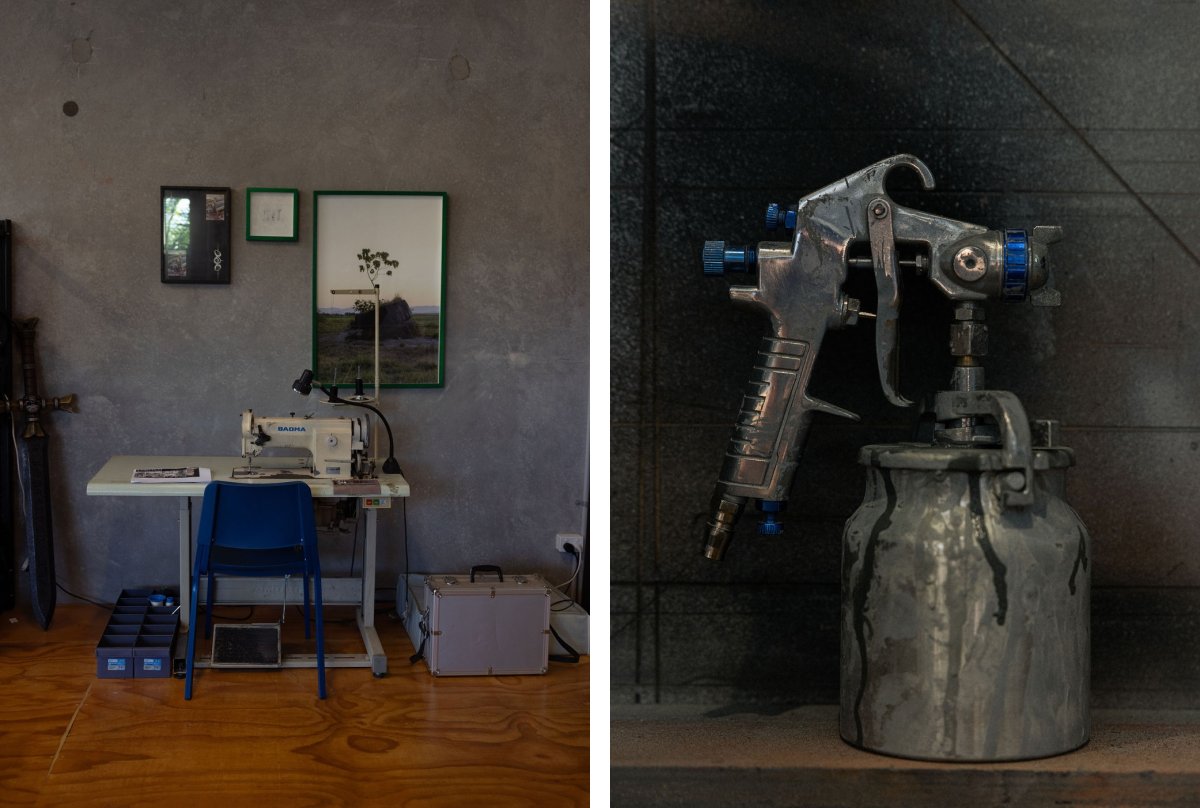
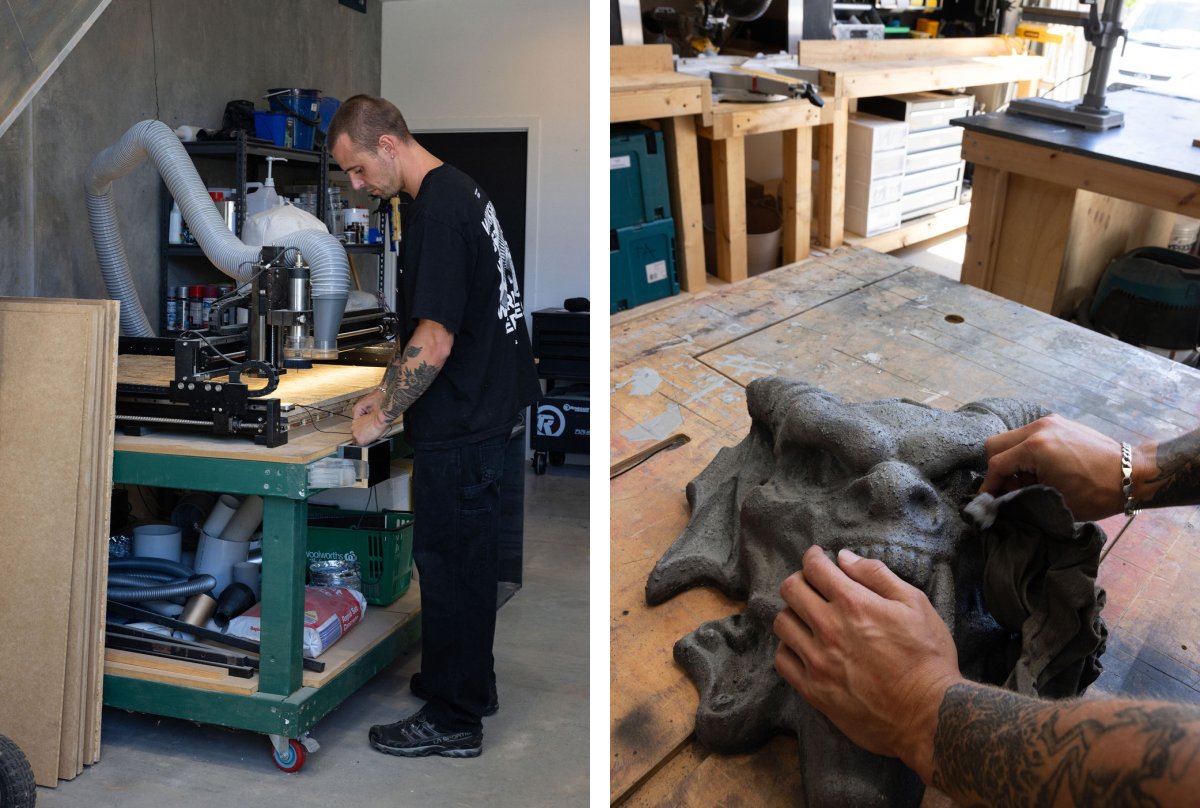
We do every form of fabrication. Metal work, CNC, woodwork, sculpting, leatherwork, upholstery, plastic work, everything depending on the project.
Sometimes a concept has to become a finished hero prop in a matter of days. That requires quick problem-solving, hybrid workflows and builds designed not only to look good but also to survive handling, transport, multiple takes and fast repairs if needed. It is fun, highly creative and often extremely intense.
Could you outline what a typical project looks like from the first client conversation through to the final build?
A typical project starts with a conversation about what the client is trying to achieve, what reference material already exists and how the piece will be used. Sometimes that comes in the form of a sketch, moodboard or rough CAD file, and other times we are starting from almost nothing. At that stage we usually clarify the creative brief, the budget, the timeline and any practical requirements around transport, installation or durability.
From there we move into design development. That can involve refining existing 3D files, creating models from scratch, testing proportions, preparing renders for approval and making sure the piece is engineered in a way that can actually be fabricated efficiently. We usually take the client through a few rounds of approvals so the design direction is locked in before fabrication begins.
Once approved, we choose the most suitable production methods for the job. That might involve 3D printing for complex geometry, CNC machining for structural or repeatable components, sculptural hand-finishing for organic forms, and scenic finishing to bring the whole piece to life. Paint and finish approval is often a key stage because surface treatment has such a big impact on the final realism of the object.
At the end of the process, everything is assembled, checked, packed and either delivered, shipped or installed depending on the project. Even though the workflow changes from job to job, the goal is always the same: to take an idea from concept to a finished physical object that feels resolved, durable and visually convincing.
For large-scale builds such as the living room set or plane interior, how long does it usually take to bring a project of that size to life?
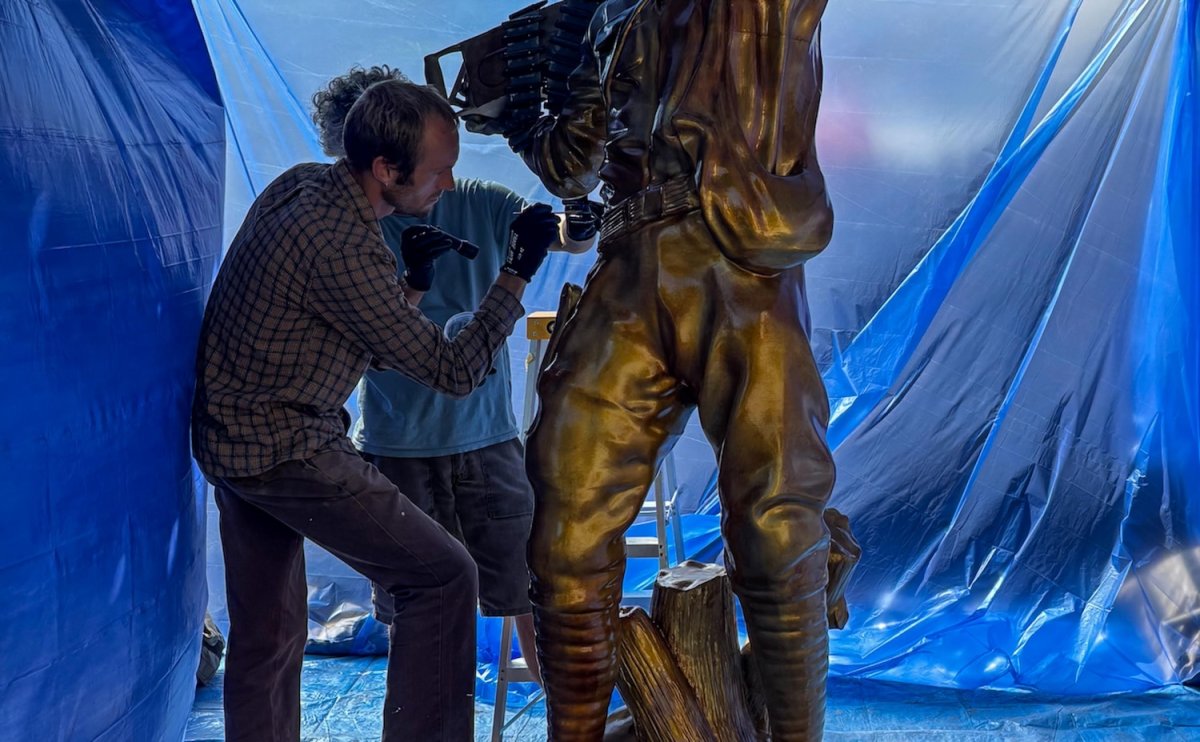
This depends on the deadline. We’ve moved mountains in one week if we’ve had to.
How do you find new clients and projects while being based in the Northern Rivers, especially given the physical nature and scale of your work?
Honestly, it’s luck, consistency and hustling. It’s not easy, but I don’t think it’s necessarily easy anywhere to keep cashflow steady in a small business.
What inspired you to start Trade Arts and what were some of the key highs, challenges, or learning moments in that transition?
I wanted to combine all of my experience, passion and skills into a business. I also wanted to create a company that I wish existed when I was younger.
There can be a disconnect between formal education and the hands-on, fast-moving skill sets that many creative industries actually need.
Is mentorship or taking on interns something you would consider in the future?
Yes, definitely. We are currently developing a pilot program aimed at introducing young people in the Northern Rivers to design, fabrication and creative technology. The idea is to create a more direct pathway into practical skills like 3D printing, digital design, CNC processes, prop making and scenic finishing, especially for people who may not see traditional university pathways as the right fit for them
There can be a disconnect between formal education and the hands-on, fast-moving skill sets that many creative industries actually need. We are interested in building something that is practical, industry-informed and grounded in real production workflows.
The goal is for the pilot to be accessible to young people in the region who are curious about creative fabrication, whether they are school leavers, emerging creatives or people looking for a different entry point into the industry. Timing is still being worked through, but we are actively developing the framework now through local conversations and partnerships.
The best way to stay up to date would be through Trade Arts’ Instagram and website, where we will share any announcements as the pilot develops.
And finally, any exciting projects or plans on the horizon you can share with us?
Our work is going to be seen across multiple Hollywood blockbusters very soon, which is exciting.